Self-sampling in cervical screening is a way for women to collect their own sample at home instead of having a cervical screening test done by a doctor or nurse.
How it works
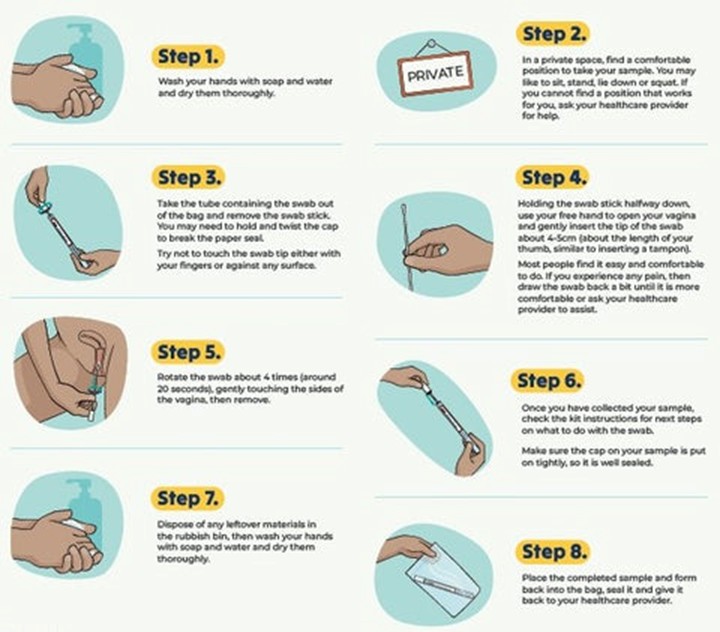
The user uses a small swab or brush to take a sample from the vagina themselves.
The sample is usually taken at home, following clear instructions.
The sample is then sent to a laboratory for testing.
The lab checks the sample for human papillomavirus (HPV), which can cause cervical cancer.
If HPV is found, the person may be asked to attend a clinic for further tests. If no HPV is found, no further action is needed at that time.
Self-sampling does not replace all cervical screening tests, but it may help people who find traditional screening difficult or uncomfortable. It can make screening more accessible for those who avoid or delay appointments for reasons such as discomfort, embarrassment, time constraints, or past negative experiences.
Self-sampling: the Irish story so far
Currently Ireland does not have the option of self-sampling. Ireland is planning to introduce self-sampling for cervical screening, but it is not yet part of the National Screening Programme. People still need to book and attend a GP or clinic for a traditional cervical screening test.
Planned changes and research
The Health Service Executive (HSE) in Ireland is actively researching and preparing for self-sampling. This includes surveys and studies to understand how it could work here and whether it would help increase participation, especially for people who do not attend regular screening.
A feasibility study is being planned for early 2026. This study will test how self-sampling could be offered (for example via GPs), how samples would be processed in laboratories, and what support people might need to take the samples correctly
Findings from these studies will be reviewed by the National Screening Advisory Committee before any change is formally introduced into the national screening programme.
What about self-sampling at home?
Media reporting and health service planning indicate that self-sampling kits for home use are expected to roll out or be trialled around 2026 as a possible additional option in the CervicalCheck programme.
Even then, self-sampling would not replace regular screening but would give people another way to be screened, especially those who avoid clinic appointments.
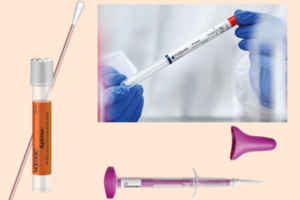
Image sourced from UK' National Screening Service
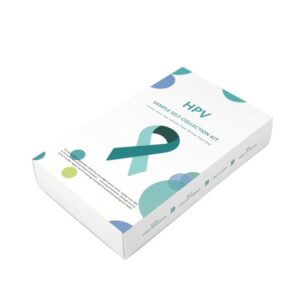
Image sourced from Medico Swab
Image sourced from New Zealand Government
Differences between self-sampling and cervical screening
Self-sampling
The person takes their own sample, usually at home.
Uses a swab placed in the vagina (not the cervix).
Tests for HPV only.
If HPV is found, a follow-up clinic appointment is needed.
Cervical Screening (Attending a Clinic)
Done by a GP or practice nurse in a clinic.
A sample is taken directly from the cervix.
Tests for HPV, and if needed, checks cells for changes at the same time.
Follow-up tests can often be arranged more quickly.
Benefits of self-sampling
Can be done at home, which many people find more comfortable and private.
Helps people who avoid or delay screening because of discomfort, embarrassment, or lack of time.
Makes cervical screening more accessible for under-screened or never-screened people.
Reduces the need for a pelvic examination at the first step.
Limitations of self-sampling
It only tests for HPV, not cell changes.
A clinic visit is still needed if HPV is detected.
Some people may feel unsure about taking the sample correctly.
Clear instructions and support are important to make sure samples are accurate.
A healthcare professional cannot answer your questions or visually check for any abnormalities.
Self-sampling offers a more flexible and accessible option for cervical screening, especially for people who do not attend regular smear tests. However, it does not fully replace clinician-led screening and works best as part of a wider screening programme.