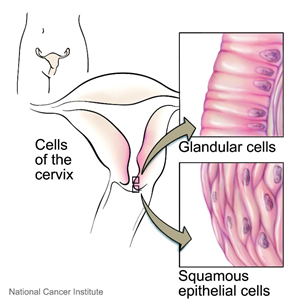
The cervix is described as a barrel or round shaped organ which is located at the end of the vagina and connects the uterus (womb) to the vagina.
It is a strong muscle which also forms the opening of the womb. It allows the passage of sperm into the uterus, and it also acts as a barrier by preventing foreign bodies from entering the uterus. It secretes a mucus regularly that changes according to your hormones. The cervix is also flexible in that it can dilate during childbirth and allow the passage of the lining of the endometrium during menstruation.
The cervix is made up of muscle and connective tissue and is divided into 2 main parts:
- The endocervix is the inner lining of the cervix that extends up into the uterus. This can be described as a tunnel from the cervix to the uterus. It tends to be lined with glandular cells
- The ectocervix is the outer part of the cervix. It is rounded and protrudes out into the vagina. This can be seen during a pelvic exam when the doctor examines the cervix using a speculum. It tends to be lined with squamous cells.
These glandular and squamous cells meet at the transformation zone, and this is the area where most cervical cancers originate.