
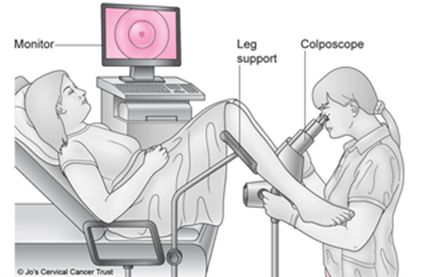
Colposcopy is an examination to look at your cervix. Your cervix is the opening to your womb from your vagina.
A colposcopy examination helps a specialist doctor or nurse (colposcopist) to confirm if cells in your cervix are abnormal. It also helps them decide if you need treatment to remove the cells.
The cells can go back to being normal by themselves. But sometimes there is a risk they could turn into cervical cancer if you do not have treatment.
Removing these abnormal cells (sometimes called pre-cancerous cells) means they will not be able to turn into cancer.
When might you need a colposcopy
You may need colposcopy if:
- you have had 2 or more positive tests in a row for human papillomavirus (HPV)
- a cervical screening test (smear test)finds that you have abnormal cells in your cervix
- the GP or nurse who did the screening test thought your cervix did not look as healthy as it should
- it was not possible to give you a normal (negative) result after several screening tests
- you have symptoms of cervical cancer and your GP refers you for a colposcopy
Try not to worry if you are told you will need to have a colposcopy examination. It is a standard part of a screening process.
It is important that you attend your colposcopy appointment, even if you are pregnant.
Risks and side effects
Colposcopy is very safe. It should not cause any serious problems.
But you may have:
- discomfort or pain – tell the colposcopist if the examination is painful, they will try to make you more comfortable
- brown or black vaginal discharge – this can be caused by the dye or paste that may be used after a biopsy and should pass quickly
- light bleeding – this can happen if you have a biopsy and should pass within 3 to 5 days
Acknowledgement
This page contains information based upon content from reliable sources including the HSE’s website (this link will take you to hse.ie).